Living with Lovegrass
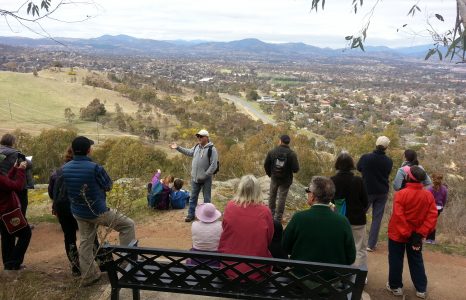
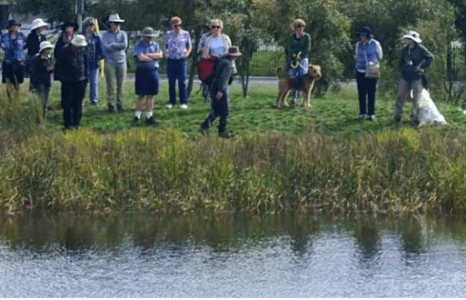
‘Living with Lovegrass’ a forum designed around learning from each other on how to manage African Lovegrass was held at the Namadgi Visitor Centre on Saturday 22nd May.
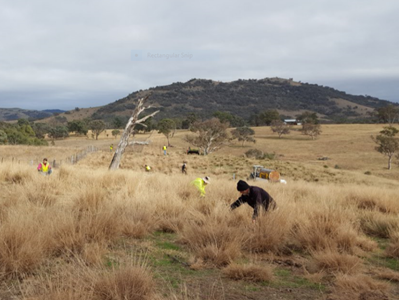
Around sixty people attended the forum and it was interesting to hear the range of views expressed about lovegrass. Some graziers expressed the view that lovegrass is here, cattle can use it, so perhaps we are better off devoting resources to Serrated Tussock. Others thought that lovegrass is potentially our worst environmental and agricultural weed species. Whatever the view there is no denying African lovegrass is a highly persistent, summer growing, 
perennial grass weed that is invading rural properties,
urban parklands and roadsides and nature reserves across our region.
Anna Van Dugteren, Esther Duffy, Geoff Hyles, Steve Welch and potentially David Shorthouse will meet to discuss how we can promote recommendations out of the forum.
African Love Grass forum information:
ALG Forum Final Report 180610updated.pdf.
ACT Rural Landholders’ Association ALG Discussion Paper.doc.
African-lovegrass-management.pdf.
African Lovegrass-MRC 1998.
Powerpoint presentation.
________________________________________
Willow sawfly
Its that time of year again when willow sawfly may be active. Already willow populations along the Murrumbidgee are showing impact from willow sawfly.

Its impact on willow populations in Australia is being studied by Fiona Ede, a researcher from the Department of Primary Industries, Victoria. Fiona would like to collate as much information about willow sawfly activity as possible. If you observe sawfly activity she would greatly appreciate your observations - in particular date, location and severity (extent of defoliation).
Mexican Feather Grass
Mexican Feather Grass (Nassella tenuissima) Family Poaceae
It has recently come to notice that over 300 plants of Mexican Feather Grass (MFG) have been sold through Canberra nursery outlets, probably labelled as Stipa.
If you have bought Stipa plants from any nursery outlets in the ACT or region within the last 12 months please have the plant checked, or check it yourself.
This species has the potential to invade pastures and native grasslands in the ACT as an agricultural and environmental weed as bad as Serrated Tussock . It is not yet established in the ACT, and we really don’t want it here either!
Read the full Mexican Feather Grass story, with links.
Fireweed Alert
Fireweed (Senecio madagascariensis) Family Asteraceae
Fireweed was found in the ACT in September & had been found beside the Captains Flat Rd in Carwoola, NSW last year. Previously, it was believed that winter frosts would limit its spread on the tablelands, but experiences indicates that this is not the case. Fireweed normally occurs along the South Coast & north of Goulburn. It is highly invasive and toxic to horses.
Description: Fireweed is a low branching annual herb with leaves 2-6 cm long, occasionally 8-10 cm on older, vigorous plants. Bright green, thin, slightly fleshy, toothed or smooth- edged, hairless, alternate on stem. Seeds are very fine, ‘dandelion’-like seed heads. Usually seeds during spring.
Additional Fireweed information and resources.